
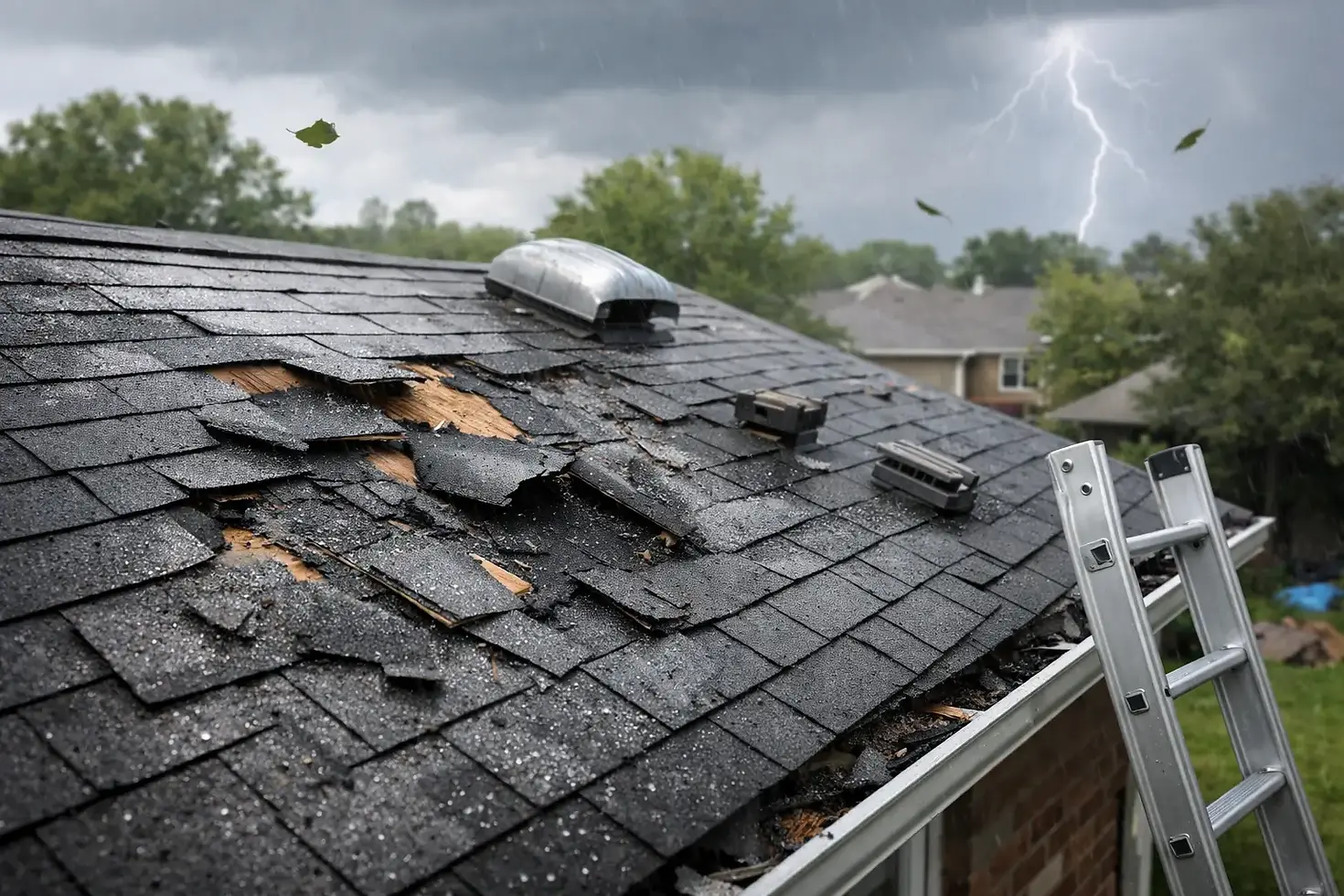
Storm Damaged Roof Signs You Shouldn’t Ignore
The day after a hard storm, most property owners look for the obvious - a fallen limb, missing shingles, water dripping from the ceiling. But many storm damaged roof signs are easier to miss, and that is where expensive problems start. A roof can take a hit from wind, hail, and flying debris without looking disastrous from the driveway, while hidden damage keeps working its way into decking, insulation, ceilings, and walls.
In storm-prone areas like Memphis, West Tennessee, Northeast Arkansas, and North Mississippi, waiting too long is one of the costliest mistakes a homeowner or property manager can make. Fast action matters, not just to protect the building, but also to document damage while it is still fresh and easier to trace back to the storm.
The most common storm damaged roof signs
Some signs show up immediately. Others take days or even weeks to appear. That delay is exactly why many roofs go untreated longer than they should.
Missing shingles are one of the clearest warning signs. If a section of roof looks patchy or uneven after a storm, wind may have torn shingles away completely. Even one missing shingle can expose the underlayment and decking to moisture. On a commercial roof, the same issue may show up as membrane tears, lifted seams, or punctures rather than missing shingles.
Lifted or creased shingles are another red flag. A shingle does not have to blow off to be compromised. Strong wind can break the seal, bend the tabs, or create creases that weaken the material. From the ground, the roof may still look mostly intact. Up close, that damage can shorten the life of the system and increase the chance of leaks during the next storm.
Granules collecting in gutters or downspouts often point to hail or aging shingles made worse by severe weather. Asphalt shingles rely on those granules for protection. When they start washing off in noticeable amounts, the surface becomes more vulnerable to sun exposure and water intrusion. A little granule loss can be normal over time. Heavy loss right after a storm usually is not.
Dents on metal components can also tell a story. If you see impact marks on gutters, flashing, vents, or metal roof panels, hail may have hit harder than you think. Those dents do not always mean the entire roof needs replacement, but they are a strong clue that the roofing surface may have suffered damage too.
Inside the property, water stains on ceilings or walls are among the most urgent storm damaged roof signs. A brown spot in an upstairs room, a bubbling patch of paint, or a damp area in the attic should never be brushed off. By the time interior staining appears, water has already moved past the outer roofing materials and into the structure.
Signs of storm roof damage that people overlook
Not every warning sign looks dramatic. In fact, some of the most serious problems start quietly.
Loose flashing around chimneys, vents, skylights, and roof edges is a common issue after high wind. These transition points are already more vulnerable than the main field of the roof. If flashing shifts or pulls away, water can slip in around the edges even if the shingles themselves still look fine.
Sagging sections of roofline deserve immediate attention. A roof should have a consistent shape. If one area looks dipped, uneven, or soft after heavy rain, trapped moisture may be affecting the decking below. That can signal structural damage, not just a surface issue.
Clogged or damaged gutters can also point to roof trouble. After a storm, gutters may fill with shingle granules, roofing fragments, or branches that were scraped across the surface. When drainage gets blocked, water backs up along the roof edge and adds another layer of risk.
In the attic, daylight coming through the roof boards is a warning that should never wait. So is a musty smell, wet insulation, or dark staining on wood. Many owners do not check the attic after a storm, but it is one of the best places to catch a problem before it spreads through living or working space.
Why quick inspections matter
Storm damage is rarely a one-size-fits-all situation. One roof may only need a minor repair. Another may look similar from the ground and actually need major work because wind got under the system or hail bruised the materials beyond what the eye can easily catch.
That is why timing matters. The longer damaged areas sit exposed, the more likely you are to deal with leaks, mold, insulation damage, rotten decking, and interior repairs that cost more than the original roofing issue. Quick inspections also help with insurance claims because the timeline is clearer and documentation is easier to build.
There is also a practical reality here. Storm season does not wait for your schedule. If your roof was weakened by the last storm, the next round of wind and rain can turn a manageable repair into a much larger job.
When a roof repair may be enough
Not every storm means full replacement. If damage is limited to a small area, the roof is otherwise in good condition, and the system still has useful life left, a targeted repair may make sense. Replacing a few shingles, resealing flashing, repairing a vent area, or correcting minor membrane damage can restore protection if the problem is caught early.
That said, repairs are only the right answer when they truly solve the issue. If a roof has widespread hail impact, repeated wind damage, aging materials, or hidden moisture under the surface, patching one area may only delay a bigger failure.
An honest inspection should tell you which side of that line you are on.
When storm damaged roof signs point to replacement
A full replacement becomes more likely when damage is spread across multiple slopes, when shingles are brittle or heavily creased, when leaks have reached the decking, or when the roof was already near the end of its life before the storm hit. Commercial properties may face similar decisions if seams are failing across a broad area or water intrusion has affected insulation and interior operations.
Replacement can feel like the bigger step, but sometimes it is the more cost-effective one. Repeated repairs on a compromised roof can add up fast, especially if each new storm opens the same weak spots. For many owners, long-term protection, stronger warranties, and fewer surprise expenses make replacement the smarter move.
That is one reason buyers look closely at contractor credentials, workmanship standards, and warranty coverage. A roof is not just another repair bill. It is a major layer of protection for the entire property.
What to do after you spot storm damaged roof signs
Start with a visual check from the ground and around the property. Look for missing materials, debris impact, dented metal, and anything unusual around gutters or downspouts. Inside, check ceilings, upper walls, and the attic for moisture or staining.
Take photos if you notice anything suspicious. Good documentation can help later, especially if the damage worsens or you need to support an insurance claim. What you should not do is climb onto the roof yourself after a storm unless you are trained and properly equipped. Wet surfaces, loose materials, and hidden structural weakness make that a risky move.
The safest next step is to schedule a professional inspection. A qualified roofing contractor can tell the difference between cosmetic wear and functional storm damage, spot issues you cannot see from the ground, and explain whether repair or replacement is the better investment.
For property owners who want clear answers without the runaround, that local experience matters. A family-owned company like Price Contracting Solutions understands how fast weather can turn in this region and how important it is to move from concern to a real plan. Free quotes, straightforward recommendations, and strong warranty protection are not extras - they are part of making the process easier on the customer.
Don’t let a small problem turn into a major one
The hardest part about storm roof damage is that it often looks smaller than it is. A few loose shingles or a faint ceiling stain may not seem urgent today, but roofs rarely fix themselves. Water keeps moving, materials keep weakening, and repair costs keep rising.
If something looks off after a storm, trust that instinct and get it checked. Catching damage early is one of the simplest ways to protect your home, your tenants, your business, and your budget.


Comments