
Insurance Claim Roof Damage Help That Works
The call usually starts the same way. A storm rolls through, shingles end up in the yard, water shows up on the ceiling, and suddenly you need insurance claim roof damage help fast. The hard part is not just getting the roof repaired. It is making sure the damage is documented properly, the claim is handled clearly, and you are not left paying for mistakes that could have been avoided.
For homeowners and property owners, this process can feel rushed and confusing at the exact moment you need clear answers. That is why it helps to understand what insurance companies typically look for, where claims often go sideways, and how the right roofing contractor can make the whole situation easier from day one.
When roof damage becomes an insurance issue
Not every roofing problem is covered by insurance. That is one of the first realities to understand. Most policies are designed to cover sudden, accidental damage such as hail strikes, wind uplift, falling limbs, or storm-related impacts. They usually do not cover wear and tear, neglected maintenance, old age, or a roof that was already near the end of its life.
That difference matters. If a storm exposed a weak area that was already failing, the insurance company may pay for some repairs, deny others, or question whether the damage was truly storm-related. This is where solid documentation and a professional inspection matter more than guesswork.
If you are seeing missing shingles, lifted flashing, dents on metal components, leaks after a storm, granules collecting in downspouts, or visible damage from fallen debris, it is worth treating the problem seriously. Small signs can point to bigger issues underneath, especially after high winds or severe weather common across this region.
Insurance claim roof damage help starts with the right first steps
The first few moves after a storm can shape the entire claim.
Start by documenting what you can safely see. Take clear photos of visible damage from the ground, water spots inside the property, damaged gutters, fencing, siding, or anything else that may help show the storm's impact. Do not climb onto the roof yourself unless you are trained and equipped to do it safely.
Next, prevent further damage if possible. If water is entering the home or building, temporary protection may be needed. Insurance companies generally expect property owners to take reasonable steps to limit additional loss. That does not mean you should approve a full replacement on the spot. It means you should act responsibly to keep the problem from getting worse.
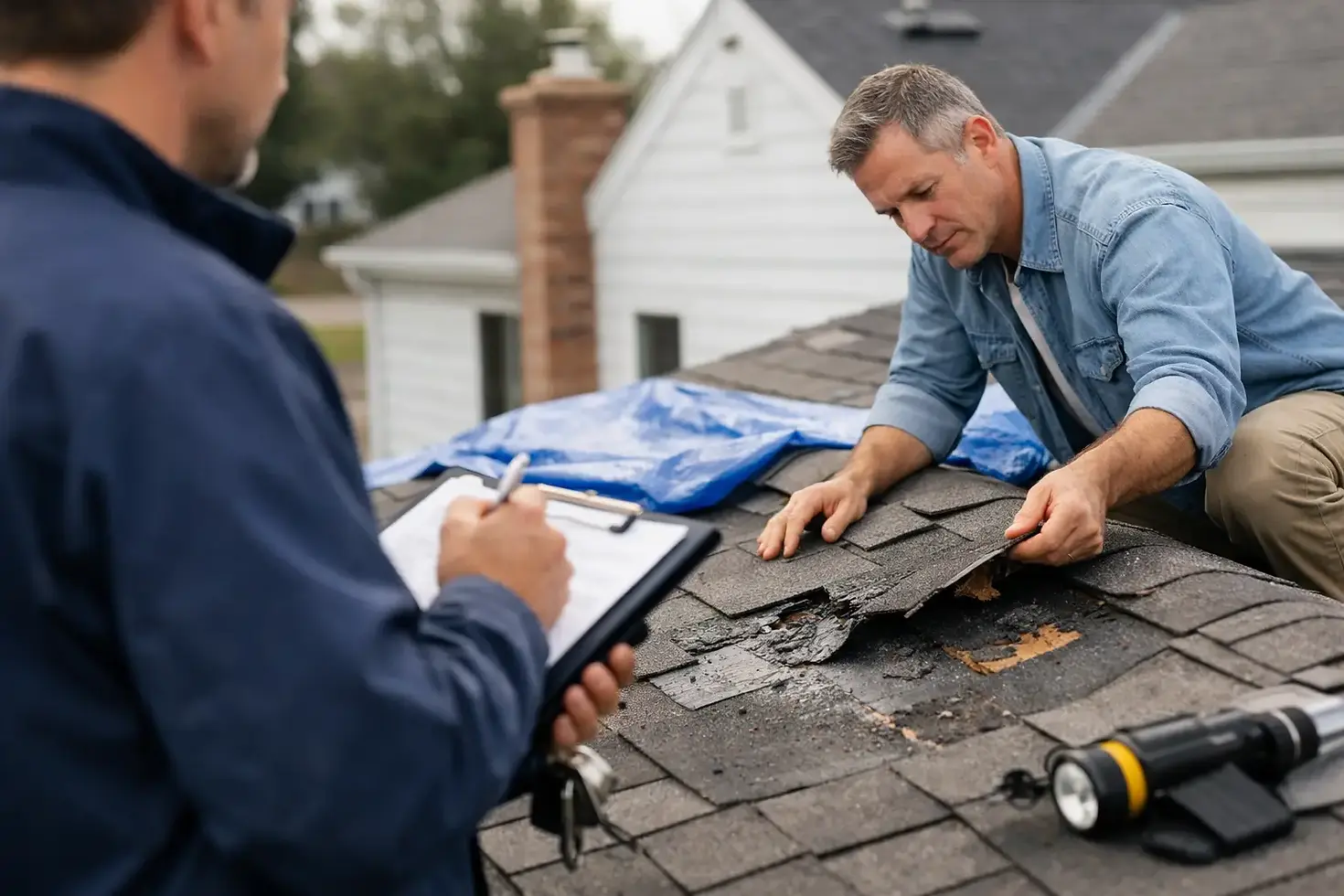
Then bring in a qualified roofing contractor for a professional inspection. This is where many property owners either protect themselves or create bigger headaches. A reliable contractor can identify whether the damage looks storm-related, explain what is cosmetic versus functional, and provide the kind of clear findings that support the claim process.
What insurance adjusters usually want to see
Insurance carriers want evidence, not assumptions. They are looking for signs that damage was caused by a covered event and that the scope of loss matches what is being claimed.
That usually includes timing, condition, and consistency. If a storm hit last week and there is fresh wind damage, broken seals, creased shingles, or impact marks that line up with the event, the claim has a stronger foundation. If the roof shows years of deterioration with no clear storm pattern, the claim gets more difficult.
This is one reason a detailed inspection report helps. The strongest roofing professionals do not just say, "You need a new roof." They show where damage exists, how it affects the roofing system, and whether repair or replacement is the more realistic path. That kind of clarity can reduce back-and-forth and help you make smarter decisions.
Why contractor choice can make or break the experience
Roofing and insurance are not the same thing, but they overlap in ways that matter. You need a contractor who understands both the construction side and the claim process well enough to communicate clearly.
A good contractor will inspect thoroughly, document honestly, and explain what they are seeing in plain language. They will not promise approval before the claim is reviewed, and they will not pressure you with vague storm-chasing sales tactics. They should also be licensed, bonded, and insured, because credentials matter when major work is on the line.
This is especially important after widespread storm events, when out-of-town crews often flood local markets. Fast promises can sound appealing when you are stressed, but poor workmanship, weak warranties, and disappearing contractors can leave you paying twice. A local, accountable company has more at stake. They have to stand behind the job after the storm headlines fade.
Common mistakes that slow down roof claims
One of the biggest mistakes is waiting too long. Some damage is obvious right away, but other signs take days or weeks to show up. That does not mean you should delay action. The longer you wait, the easier it becomes for insurers to question the timeline or argue that later damage came from another cause.
Another mistake is assuming the insurance company and the contractor will automatically agree. Sometimes they do. Sometimes they do not. There may be differences over whether the roof can be repaired, whether matching materials are available, or whether code-related items need to be included. That does not always mean someone is acting in bad faith. It often means the details need closer review.
Property owners also get into trouble when they focus only on the lowest out-of-pocket number. A cheap repair on a compromised system can cost more later if leaks continue or wind damage returns. Real value comes from quality installation, proper materials, and warranty protection that means something after the job is done.
Repair or replacement? It depends on the damage
This is where honest guidance matters. Some roofs can be repaired successfully if the damage is limited and the system is otherwise in good condition. That can be the right call when only a small section is affected and matching materials are still available.
Other situations point toward replacement. Widespread wind damage, significant hail impact, multiple leaks, brittle aging shingles, or discontinued materials can all make spot repairs a short-term fix instead of a real solution. On commercial properties, membrane damage, drainage issues, or repeated ponding can also complicate the decision.
The right answer depends on roof age, material condition, storm severity, and policy terms. That is why a one-size-fits-all sales pitch should raise concerns. You want a contractor who can explain the trade-offs clearly and back up the recommendation.
What strong insurance claim roof damage help really looks like
Real help is not just showing up with a ladder and a clipboard. It is guiding property owners through a stressful process with clear communication and dependable work.
That means showing up on time, inspecting thoroughly, helping document damage, answering questions without jargon, and setting realistic expectations about approvals, timelines, and next steps. It also means doing the roofing work the right way if the claim moves forward. A claim approval is not the finish line. The quality of the completed roof is what protects your property long after the paperwork is closed.
For many owners, warranty protection is a major part of that confidence. A roofing system backed by strong workmanship and manufacturer support can reduce future risk in a region where storms are not rare. That matters whether you own one home, manage several rental properties, or oversee a commercial building that cannot afford repeat disruptions.
How to protect yourself before you sign anything
Read every document carefully. Make sure you understand what is being authorized, what is only an inspection, and what becomes a binding contract. Ask who will perform the work, what materials will be used, what warranty coverage applies, and how supplements or change orders are handled if hidden damage is discovered.
It is also fair to ask about communication. Who updates you? Who meets with the adjuster if needed? Who is responsible for cleanup and final walkthroughs? Professional contractors should be comfortable answering those questions.
If you are comparing companies, look beyond the sales pitch. Reviews, certifications, insurance coverage, workmanship standards, and long-term warranty options tell you more than a quick promise ever will. Price matters, but so does the confidence that the crew, the system, and the company will still stand behind the work later.
Local experience matters after a storm
In storm-prone areas like Memphis, West Tennessee, Northeast Arkansas, and North Mississippi, roofing problems are not hypothetical. Wind events, hail, and heavy rain create real pressure on homes and commercial buildings year after year. That is why local experience carries weight.
A contractor who understands regional weather patterns, common roofing failures, and local property needs can often spot issues that less experienced crews miss. If that contractor also offers strong warranty protection and a clear process, the value goes beyond the initial repair. It becomes part of how you protect the property over time.
Price Contracting Solutions has built its reputation around that kind of dependable service - family-owned accountability, professional roofing standards, and warranty coverage designed for real-world weather conditions.
If your roof has taken a hit, do not wait for a small problem to turn into interior damage, mold, or a denied claim. Get the roof inspected, get clear answers, and move forward with a contractor who treats your property like it matters.


Comments