
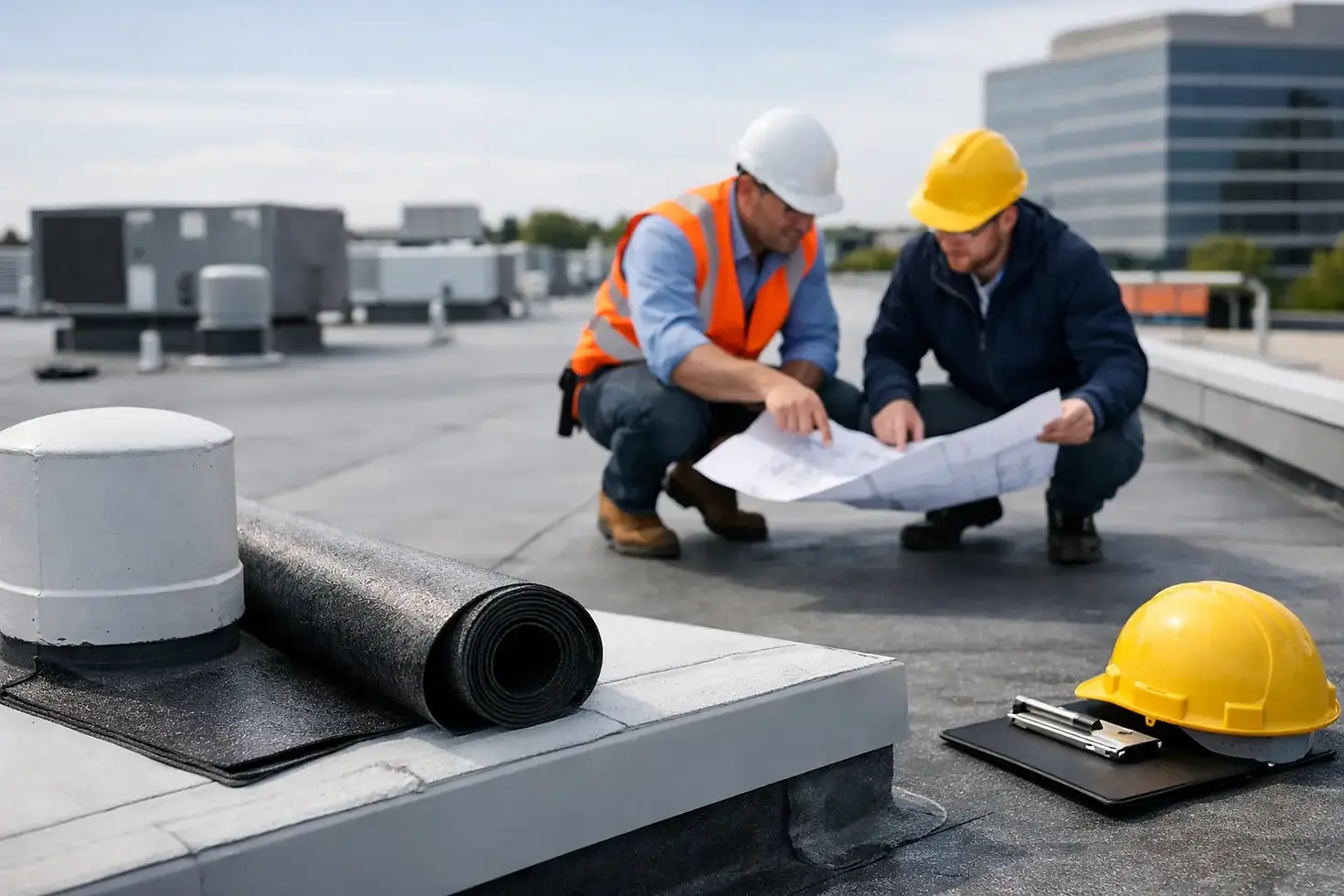
Commercial Roofing Codes That Matter
A commercial roof can look fine from the parking lot and still fail an inspection, delay a project, or create an insurance headache. That is why commercial roofing codes matter long before materials show up on-site. If you own or manage a retail center, office building, warehouse, church, or multifamily property, code compliance is not a paperwork detail. It affects safety, budget, scheduling, and how well your roof performs when storms roll through.
For most property owners, the challenge is not learning every line of the code book. It is knowing which code issues can change the scope of work and which shortcuts can cost more later. A roof replacement that ignores local requirements can trigger failed inspections, warranty issues, drainage problems, or added tear-off and retrofit work after the contract is already signed.
What commercial roofing codes actually cover
Commercial roofing codes set the rules for how a roof system must be designed, installed, repaired, and sometimes upgraded. They usually pull from model codes, manufacturer requirements, fire standards, and local amendments. The exact rules vary by jurisdiction, which means the same roofing system may be acceptable in one city and require changes in another.
In practical terms, code touches more than the membrane or shingle on top. It can affect structural load, insulation thickness, fastening patterns, edge metal, drainage, flashing height, rooftop equipment supports, fire classification, and wind uplift performance. That is why a low bid that skips the code conversation is rarely the safest bet.
For owners, the key point is simple. Code compliance is part of the roof system, not an add-on. If your contractor treats it like a side issue, you should ask harder questions.
Why commercial roofing codes change the real cost of a project
A commercial roof estimate can look straightforward until code-required upgrades enter the picture. One common example is insulation. Older buildings often have roof assemblies that fall short of current energy code requirements. If the project qualifies as a full replacement rather than a minor repair, the building may need additional insulation or a different assembly to meet current standards.
That can raise material and labor costs, but it can also improve performance. Better insulation can reduce heat gain, ease HVAC strain, and help the building hold temperature more efficiently. The trade-off is upfront cost versus long-term operating value. Owners focused only on the lowest number often miss that bigger picture.
Drainage is another area where code can change the job. Ponding water is not just ugly. It shortens roof life and can point to slope, drain placement, or structural concerns. If a roof has repeated standing water issues, code-related corrections may be needed during replacement. That can mean tapered insulation, added drains, or adjustments around penetrations and curbs.
Then there is wind resistance. In storm-prone areas, fastening patterns, attachment methods, and perimeter details matter a lot. A roof system that is not installed to the required uplift standard may become a liability when severe weather hits. It is not enough for materials to be good. The assembly has to be approved and installed correctly.
The commercial roofing codes property owners ask about most
Most owners are not asking for section numbers. They want to know what could delay the project, raise the price, or create trouble with inspectors and insurance carriers. Fair question.
Permits are usually the first concern. Many commercial roofing projects require permits and inspections, especially for full replacements or structural changes. If a contractor suggests skipping permits to move faster, that is a red flag. What feels like a shortcut today can turn into a problem during a claim, sale, refinance, or future repair.
Fire ratings matter too, especially when the building type, deck type, or occupancy creates added exposure. Roof assemblies often need to meet specific fire-classification standards. That includes the combination of insulation, cover board, membrane, and attachment method, not just the top layer.
Edge metal is another issue that gets overlooked. Poorly secured edges are vulnerable in high winds, and code requirements for edge securement have become more specific over time. If the perimeter fails, the rest of the roof can be at risk.
Flashing details come up often as well. Code may require certain flashing heights at walls, curbs, and penetrations. If those transitions are not handled correctly, leaks tend to show up there first. A roof is only as strong as its details.
Repairs versus replacement - where it depends
One of the biggest code questions is whether a building can be repaired or whether the scope crosses into replacement. That line matters because repairs may not trigger the same level of code upgrades as a full replacement.
This is where honest assessment matters. Sometimes a repair is the right move. If damage is isolated and the rest of the system still has service life, targeted repair can make financial sense. But if a roof is aging, saturated, poorly drained, or patched repeatedly, a repair-first approach may only postpone a larger and more expensive project.
Building owners should be cautious with anyone who pushes a full replacement without documenting the reasons. They should be just as cautious with anyone promising a cheap repair when the roof has broader failures. Good contractors explain the condition, the code implications, and the expected lifespan of each option.
How local conditions affect commercial roofing codes
National code language sets the baseline, but local conditions shape enforcement. Wind exposure, storm history, building use, and municipal amendments can all affect requirements. That matters in areas where strong storms and seasonal weather swings put roofs under real stress.
In parts of Tennessee, Arkansas, and Mississippi, wind and storm exposure are not theoretical. They are part of owning property. That makes fastening, uplift ratings, drainage performance, and long-term waterproofing more than compliance boxes. They are practical protection issues.
It also means experience counts. A contractor who works in your market understands how inspectors typically interpret requirements, what common failure points show up after storms, and where value engineering can help without cutting corners. That kind of local knowledge can save time and keep a project from stalling halfway through.
What to ask before signing a commercial roofing contract
If you are comparing bids, do not stop at system type and total cost. Ask whether permits are included, whether the proposed assembly meets current code, and whether the estimate includes any likely upgrades for insulation, edge metal, or drainage. Ask who is responsible for inspections and how code-related change orders will be handled if hidden conditions are found.
You should also ask about manufacturer approvals and warranty compatibility. A roof can meet code and still fall short of the warranty standard if installation details are off. The best projects align code compliance, manufacturer specifications, and real jobsite conditions from the start.
Documentation matters too. You want clear scope language, not vague promises. If a contractor cannot explain how the roof system addresses wind, drainage, flashing, and substrate conditions, that is a problem. Clear answers now usually mean fewer surprises later.
Why the right contractor makes code compliance easier
Commercial roofing codes are complicated enough without adding poor communication or weak project management. The right contractor does more than install material. They identify code issues early, explain what is required, work with permits and inspections, and build a system that protects the property long after the crew leaves.
That is especially important for owners managing budgets across multiple properties. A cheap roof that fails early, leaks around penetrations, or creates warranty disputes is not a savings. It is a recurring expense.
A dependable contractor helps you avoid that cycle. They tell you when a repair is reasonable, when replacement makes more sense, and where code requirements will affect your final number. At Price Contracting Solutions, that practical approach is part of protecting customers from short-term fixes that become long-term problems.
If you are planning commercial roof work, the smartest move is not guessing what the code might require. It is getting a clear inspection, a detailed scope, and straight answers before the project starts. A roof should protect your building, not create more questions after the first storm.


Comments