
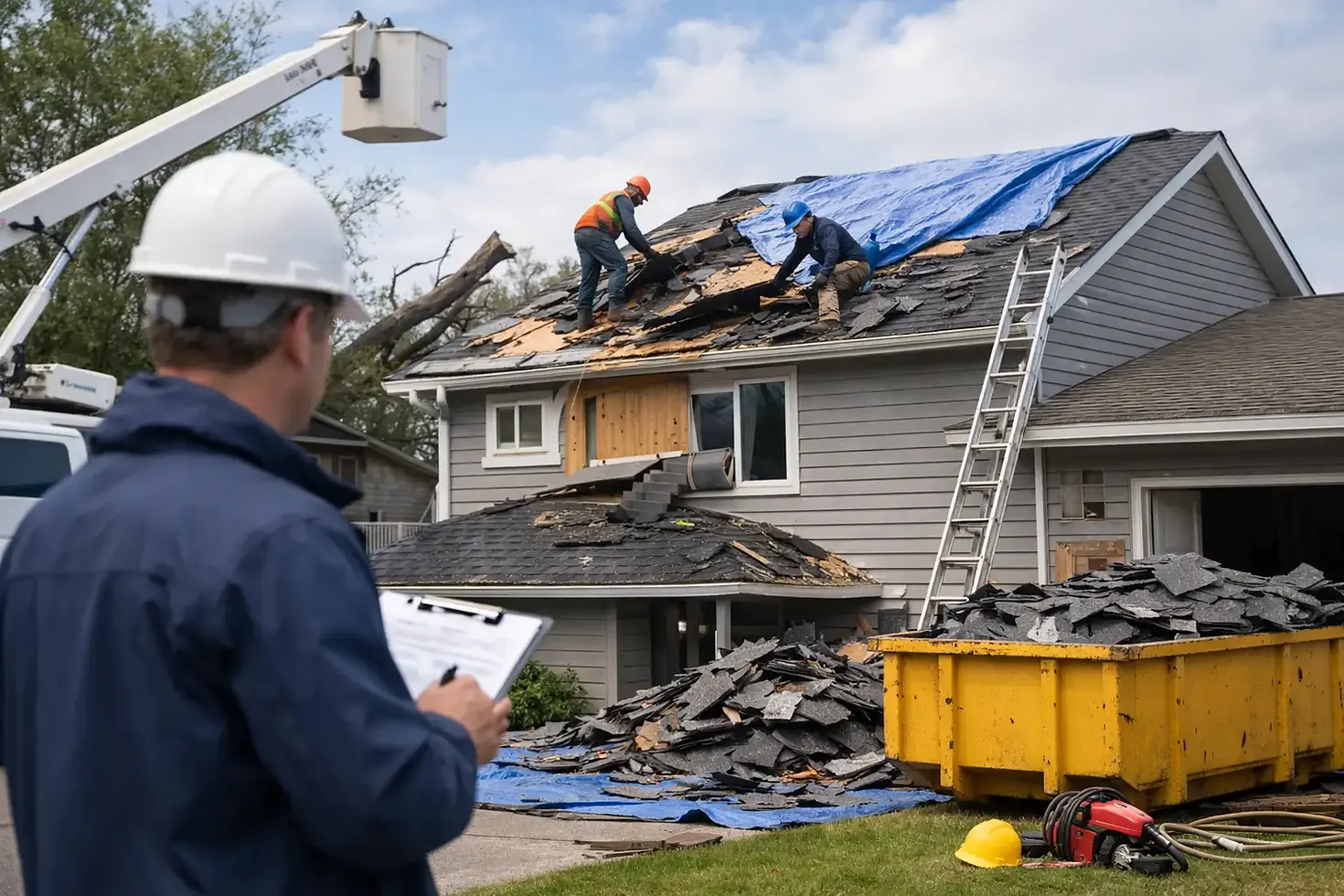
Storm Restoration Project Case Study for Homeowners
A storm can leave a roof looking mostly intact from the driveway while hiding missing sealant, lifted shingles, punctures, and water entry points that grow worse with every hard rain. This storm restoration project case study follows a representative West Tennessee homeowner’s path from a wind-damaged roof to a properly documented, professionally installed roofing system built for the next round of severe weather.
The details are representative because every roof, insurance policy, and storm event is different. The process, however, reflects what homeowners should expect when they choose a qualified local contractor instead of settling for a quick patch and a promise.
The Situation After the Storm
Following a line of severe thunderstorms, the homeowner noticed shingle pieces in the yard, a section of lifted ridge cap, and a faint stain forming near an upstairs ceiling vent. The roof was more than 15 years old, so the homeowner’s first concern was understandable: Was this storm damage, normal aging, or both?
That question matters. A contractor who looks only for obvious missing shingles can miss damage that affects the roof’s ability to shed water. On the other hand, not every worn roof qualifies for insurance coverage simply because it needs replacement. The right first step is an honest inspection that separates storm-related damage from ordinary wear.
In this case, the inspection found wind-creased shingles across several roof slopes, damaged ridge materials, exposed fasteners, and compromised flashing around a roof penetration. The ceiling stain was small, but it confirmed that the roof was no longer keeping water out where it should.
The homeowner did not need scare tactics. They needed clear photos, a plain-English explanation of the findings, and a practical plan to protect the home while the claim and replacement process moved forward.
Storm Restoration Project Case Study: From Inspection to Approval
The restoration began with documentation. The contractor photographed each affected area, noted the roof’s age and existing condition, measured the structure, and identified materials that would need to be replaced for a complete repair. Accurate documentation gives the homeowner a stronger starting point when speaking with their insurance carrier.
The homeowner then filed a claim directly with their insurance company. That distinction is important. A contractor can provide damage evidence, meet an adjuster on site when requested, and explain the work needed to restore the roof. The insurance company makes the coverage decision, and the homeowner remains responsible for their deductible under the policy.
When the adjuster inspected the property, the contractor was present to make sure the full scope was visible and understood. This is not about pressuring an adjuster. It is about avoiding avoidable gaps in the conversation, especially when storm damage involves ridge caps, flashing, accessories, ventilation, or code-related requirements that may not be obvious from the ground.
The initial insurance scope covered major roofing materials and labor, but the contractor’s review identified a few items that needed clarification. The homeowner received a clear explanation of what was approved, what required supplemental documentation, and what choices remained out of pocket. That clarity kept the project moving without surprise costs at the end.
Why a Full Roofing System Was the Better Fix
A cheap repair might have replaced the most visible missing shingles. It would not have addressed the scattered wind creases, weakened ridge protection, aging ventilation components, and flashing concerns found during the inspection.
For this home, a full replacement was the more responsible long-term decision. That does not mean every storm-damaged roof needs to be replaced. A newer roof with isolated damage may be a strong candidate for repair. It depends on the extent of the damage, material availability, the roof’s age, matching concerns, and whether a repair can truly restore dependable protection.
In this case, the homeowner chose a complete roofing system designed to work together. The work included removal of the old roofing materials, inspection of the roof deck, replacement of damaged components, upgraded underlayment in vulnerable areas, properly installed flashing, balanced ventilation, and new shingles with a color selected to complement the brick exterior.
This system approach matters because shingles are only one part of a roof. Water protection at valleys and penetrations, airflow in the attic, correct nail placement, and reliable edge details all affect how the roof performs when Memphis-area storms bring hard rain and high winds.
Installation Day: Protection Before Production
A quality storm restoration project should not turn the property into a mess for a week. Before work began, the crew protected landscaping, outdoor furniture, windows, and driveway areas as needed. Materials were staged carefully, and the homeowner knew when the crew would arrive, what access was required, and how cleanup would be handled.
Once the old roofing was removed, the roof deck received a close inspection. This is a critical moment. Covered-up problems do not disappear just because new shingles are installed over them. In this case, a small section of compromised decking near the previous leak was replaced before the new materials went on.
The crew then installed the roofing components in the correct sequence, paying close attention to the details most likely to fail under wind-driven rain. Flashing and pipe boots were addressed, ventilation was checked, and ridge materials were installed to complete the system.
At the end of the day, the property was cleaned with the same care used during installation. That included a magnetic sweep for nails and a final walkaround with the homeowner. A roof replacement is a major project, but the homeowner should not be left guessing whether the job is complete or where the debris went.
The Results That Matter After the Crew Leaves
The visible result was a roof that gave the home a cleaner, more current appearance. The more valuable result was confidence. The homeowner had documented storm damage, a clearly defined scope, repaired decking where needed, and a complete installation rather than a surface-level fix.
Warranty protection was also part of the decision. Homeowners should always ask what is covered, for how long, and whether the coverage applies to materials, workmanship, or both. Strong warranty options can reduce future risk, but only when the roof is installed according to manufacturer requirements and the terms are explained clearly.
Price Contracting Solutions supports qualifying roofing systems with up to a 50-year roofing system warranty and a 15-year wind warranty that includes free wind damage repairs. For homeowners in storm-prone areas, that kind of protection is more than a sales line. It is a practical answer to the question every property owner asks after severe weather: What happens if this occurs again?
What Homeowners Can Take From This Case Study
The biggest lesson is to act before a small storm issue turns into interior damage, mold concerns, or a more expensive repair. If shingles are in the yard, flashing is loose, granules are collecting in gutters, or a ceiling stain appears after a storm, schedule an inspection promptly.
It also pays to slow down before signing anything. Storm-chasing crews often arrive quickly after major weather events, and some may pressure homeowners into immediate agreements. A dependable contractor should be licensed, bonded, insured, able to explain the scope clearly, and willing to stand behind the work after the last nail is picked up.
Ask direct questions about the proposed solution. Is a repair truly enough? What will be replaced beyond the shingles? How will the property be protected during work? What warranty applies? Who will answer if a concern comes up later? Straight answers are a sign that the contractor is focused on the condition of your property, not just the fastest sale.
If your home or commercial property has been through a recent storm, do not wait for the next rainfall to tell you what the roof inspection should have caught. Request a free quote, get the facts on your roof’s condition, and choose a restoration plan that protects your property for the long haul.


Comments