

Can Shingles Withstand High Winds? What Matters
A few lifted shingles after a hard storm can turn into a much bigger problem fast. Water does not need a wide opening to get beneath your roofing system. It can enter at a loose edge, travel under the shingles, and damage decking, insulation, ceilings, and walls long before you notice a stain indoors. So, can shingles withstand high winds? Yes - but only when the shingles, materials, installation, and roof condition all work together.
For homeowners and property managers across Memphis, West Tennessee, Northeast Arkansas, and North Mississippi, wind resistance is not a minor detail. Straight-line winds, thunderstorm gusts, and severe weather can test every part of a roof. The right roof can handle serious weather. The wrong materials or a poor installation can leave even a newer roof vulnerable.
Can Shingles Withstand High Winds?
Most modern asphalt shingles are designed to resist wind, but their performance depends on the product rating and the roofing system beneath them. Standard shingles may be rated for lower wind speeds, while architectural and premium shingles often carry ratings up to 130 mph when installed according to the manufacturer's requirements.
That rating is not a promise that every shingle will remain untouched during every storm. Wind behaves differently around every building. Roof height, slope, nearby trees, open fields, and the direction of a storm can all increase pressure on certain areas. The corners, eaves, ridges, and roof edges usually take the hardest hit.
A wind rating is also tied to proper installation. If a contractor uses the wrong number of nails, places nails outside the required nail line, skips starter shingles, or fails to seal vulnerable edges, the roof may not perform as intended. That is why choosing a qualified roofing contractor matters as much as choosing a highly rated shingle.
What Determines Whether a Roof Holds Up
Wind resistance is a system, not a single product feature. Shingles are the visible layer, but several components help keep them where they belong.
Shingle Type and Wind Rating
Three-tab shingles are generally the most economical asphalt option, but they are thinner and often provide less wind resistance than architectural shingles. Architectural shingles are thicker, layered, and usually offer stronger performance and a more dimensional appearance. For properties exposed to regular storm activity, they are often the better long-term value.
Premium shingles may offer enhanced wind ratings, impact resistance, and longer warranty options. They cost more up front, but that investment can make sense for homeowners who want greater protection and fewer worries during storm season.
Installation Quality
A high-quality shingle installed incorrectly is still a risk. Each shingle has a designated fastening area. Nails must be placed accurately, driven flush, and used in the correct quantity. Too few nails or overdriven nails can make shingles more likely to tear free when wind gets underneath them.
Starter strips are equally important. They secure the first course of shingles along the eaves and rake edges, where wind uplift begins. Proper drip edge, underlayment, flashing, ridge caps, and ventilation also contribute to a roof that stays secure during difficult weather.
Roof Age and Existing Wear
As shingles age, they lose flexibility and adhesion. Granules wear away, sealant strips weaken, and edges may curl or crack. A roof that handled storms well ten years ago may not offer the same protection today.
Past repairs can matter, too. Mismatched shingles, improperly sealed patches, exposed fasteners, and previous wind damage can create weak points. If you have noticed loose tabs, granules in gutters, or shingles that look uneven after a storm, a professional inspection can identify whether the issue is isolated or part of a larger problem.
Building Design and Exposure
A low-slope roof in a sheltered neighborhood faces different pressures than a steep roof on an open property. Taller homes, commercial buildings, homes near wide-open fields, and properties with large roof planes can experience greater uplift forces.
Wind can also accelerate around corners and change direction suddenly. That is why roof edges and ridges deserve careful attention during installation and inspection. The goal is not simply to cover the roof. It is to build a system that accounts for how wind actually moves around your property.
The Most Common Wind Damage to Shingles
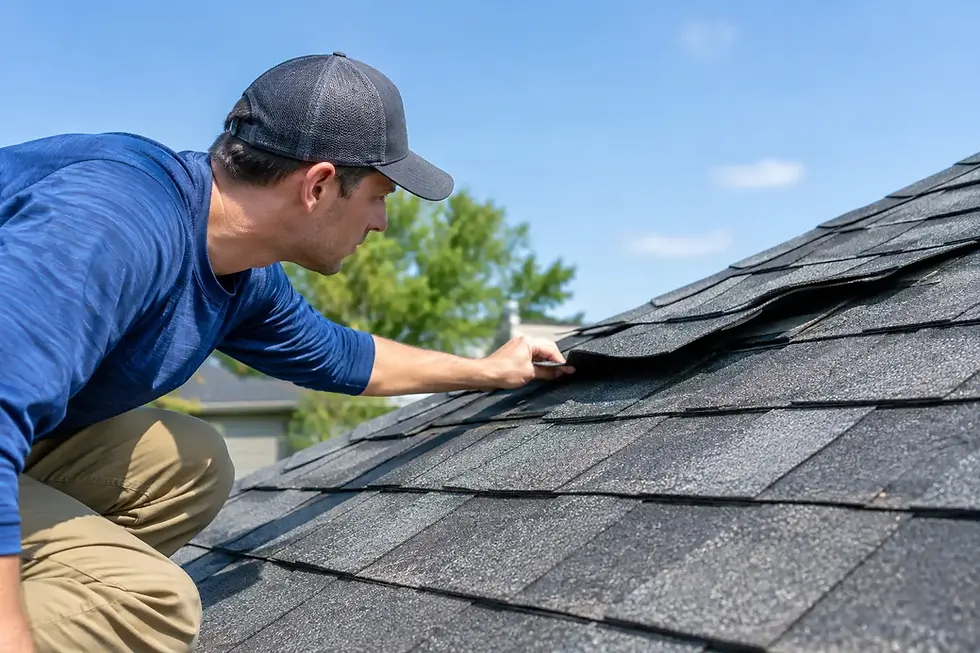
Wind damage is not always obvious from the ground. A roof can look mostly intact while having compromised seals or lifted tabs that allow water underneath. After severe weather, look for visible warning signs such as missing shingles, creased or folded tabs, exposed nail heads, loose ridge caps, and pieces of shingle material around the yard.
Inside the property, check for new ceiling spots, damp insulation in the attic, musty odors, or daylight around roof penetrations. These signs do not always mean the roof needs replacement, but they should not be ignored. Quick repairs can often prevent a small wind issue from becoming a costly interior repair.
Avoid climbing onto a storm-damaged roof yourself. Wet shingles, loose materials, and hidden soft spots create real safety hazards. A trained roofing professional can inspect the roof, document the condition, and explain what is repairable versus what may require a replacement.
How to Improve Your Roof's Wind Resistance
If you are replacing a roof or planning ahead before storm season, prioritize the full roofing system. Start with shingles that have an appropriate wind rating for your property and climate. Then make sure the installation follows manufacturer specifications from the first starter strip to the final ridge cap.
Ask your contractor how they handle high-wind areas, what fastening pattern they use, and whether the proposed shingles qualify for enhanced warranty coverage. You should also ask about ventilation and attic moisture. Excess heat and moisture can shorten shingle life, weakening the roof over time even without a major storm.
Routine maintenance protects your investment as well. Keep gutters clear so water can drain correctly. Trim limbs that could scrape or fall onto the roof. Replace damaged flashing around chimneys, vents, and skylights before a storm forces the issue. A simple inspection after major weather is one of the most practical ways to stay ahead of damage.
Why Warranty Protection Matters After Wind Damage
A manufacturer warranty and a workmanship warranty are not the same thing. Manufacturer coverage generally addresses defects in the roofing materials. Workmanship coverage addresses problems related to installation. Since wind performance depends heavily on both materials and installation, understanding both forms of protection is essential.
Read the warranty details before committing to a roofing project. Ask what wind speeds are covered, how long coverage lasts, what maintenance expectations apply, and whether wind damage repairs are included. The lowest quote may look attractive at first, but weak materials, rushed labor, and limited protection can cost far more after the next major storm.
Price Contracting Solutions offers qualifying roofing systems with up to a 50-year warranty and a 15-year wind warranty that includes free wind damage repairs. That protection gives local property owners a clearer path forward when weather puts their roof to the test.
When to Schedule a Roof Inspection
Do not wait for shingles to blow into the yard before checking your roof. Schedule an inspection after a storm with strong gusts, hail, falling limbs, or visible debris. It is also smart to have an older roof evaluated before storm season, especially if it is approaching the end of its expected service life.
A professional inspection provides answers you cannot get from a quick glance from the driveway. You will know whether the roof is secure, whether repairs are needed, and whether an insurance claim may be worth exploring. More importantly, you can address small issues while they are still manageable.
Your roof should give you confidence when the forecast turns rough. If high winds have passed through your area or you are concerned about an aging roof, request a free quote and get a clear assessment before a minor weakness becomes the next expensive repair.


Comments